TDLR Licensed MAC #1963 · Independent · No Remediation Conflict
Schedule a Free Consultation - Call 832-280-4747
<span>Licensed Mold Testing & Inspection in The Woodlands, TX</span>
Call to Schedule 832-280-4747<a href="tel:8322804747">📞<span>Licensed Mold Testing & Inspection in The Woodlands, TX</span>
<a href="tel:8322804747">📞 832-280-4747 — Free
How to Handle a Tenant Mold Complaint in Texas- Landlord Mold Response
Received a tenant mold complaint in Texas ? Follow this 8-step Texas landlord guide — from documenting the complaint to post-remediation clearance testing and CMR filing.
TEXAS LAW & LICENSING
Brian Boone
5/9/20265 min read
How to Handle a Tenant Mold Complaint in Texas — A Landlord's Guide
By Mold Consultant Group | TDLR Licensed MAC #1963 | Serving The Woodlands, Spring, Conroe & Montgomery County, TX
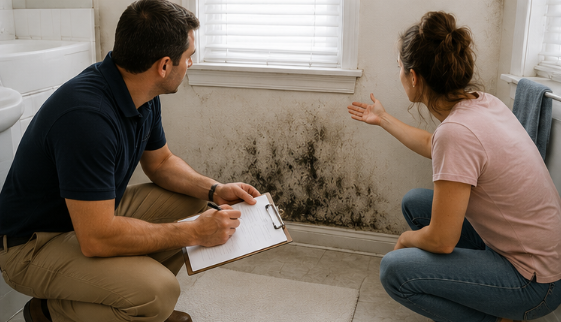
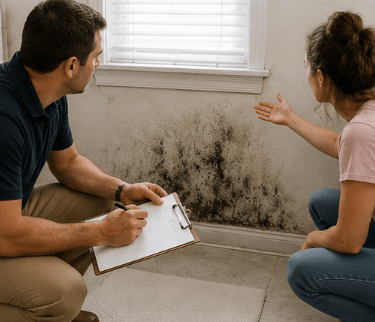
A tenant calls to report a musty smell, visible dark spots on the wall, or a family member experiencing respiratory symptoms they believe are mold-related. For a landlord or property manager in Texas, this call requires a careful, documented, and legally compliant response.
Mold complaints from tenants are one of the most common sources of landlord-tenant disputes and legal liability in Texas real estate. Handled correctly, they're manageable. Handled incorrectly — or ignored — they can result in habitability claims, rent withholding, lease termination, and civil liability. Here's what Texas landlords and property managers need to know.
Your Legal Obligations Under Texas Property Code
Texas Property Code Section 92.056 establishes a landlord's duty to repair or remedy conditions that materially affect the health or safety of a tenant. Mold that creates unhealthy living conditions falls squarely within this category. The key provisions landlords need to understand:
• A tenant must give written notice of the condition and allow a reasonable time to repair
• 'Reasonable time' under Texas law is generally interpreted as 7 days for health and safety issues
• If the landlord fails to remedy the condition after proper notice, the tenant may have the right to terminate the lease, repair and deduct from rent, or pursue civil remedies
• Landlords cannot retaliate against tenants for reporting habitability issues — retaliation is specifically prohibited under Section 92.331
The statute doesn't define exactly what constitutes a mold-related habitability violation — that determination depends on the species, concentration, and extent of contamination. This is precisely why an independent professional assessment is essential. It replaces subjective dispute with documented facts.
Why Independent Assessment Protects the Landlord
When a tenant reports mold, a landlord's instinct may be to send a maintenance worker to look at it, clean visible growth with bleach, and consider the matter closed. This approach creates several serious problems:
It doesn't address the moisture source. Surface cleaning removes visible mold temporarily but does nothing about the underlying moisture that's causing it. Growth will return, typically within weeks, and the tenant's documentation of repeated complaints becomes evidence in a habitability claim.
It produces no documentation. A maintenance visit with no formal report creates a gap in your records. If the tenant later claims the condition was not addressed, you have no professional documentation showing what was found, what was done, or that the condition was resolved.
It creates liability for inadequate remediation. Under Texas law, mold remediation must be performed by a licensed Mold Remediation Contractor (MRC) when the scope exceeds minor surface cleaning (generally defined as more than 10 contiguous square feet). A maintenance worker cleaning a larger mold condition without proper licensing and containment can spread spores to unaffected areas — worsening the problem and increasing your liability.
An independent assessment from a licensed MAC gives you a professional report documenting the actual conditions found — species, concentration, location, and probable moisture source. That report is your protection if the tenant's complaint escalates to a legal dispute, and it defines the exact scope of any remediation required.
The Correct Step-by-Step Response to a Tenant Mold Complaint
Step 1 — Acknowledge in writing. Respond to the tenant's complaint in writing within 24 hours, confirming you have received the notice and are initiating an assessment. This starts your documented response timeline.
Step 2 — Schedule an independent assessment promptly. Contact a licensed MAC and schedule an assessment as soon as possible — ideally within 3 to 5 days of receiving the complaint. This demonstrates good faith response within the 'reasonable time' standard.
Step 3 — Share the assessment findings with the tenant. Transparency here is in your interest. A report showing normal mold levels resolves the complaint with professional authority. A report confirming elevated conditions gives both parties a clear, objective basis for the remediation scope.
Step 4 — If remediation is needed, hire a licensed MRC. Texas law requires a licensed Mold Remediation Contractor for significant mold remediation. Get the written protocol from your MAC first, then obtain bids from licensed MRCs. The protocol defines exactly what must be done — protecting you from scope inflation.
Step 5 — Obtain clearance testing. After remediation, a licensed MAC must perform post-remediation verification (PRV) testing. The resulting Certificate of Mold Damage Remediation (CMDR) is your documentation that the condition was professionally resolved. Keep this on file permanently.
Multi-Family Properties and Recurring Complaints
For property managers overseeing apartment complexes, multi-family buildings, or multiple rental properties in The Woodlands, Spring, Conroe, or the greater Montgomery County area, a proactive approach to mold is significantly more cost-effective than reactive response.
Consider scheduling periodic indoor air quality assessments for your portfolio — particularly for older buildings, units with reported HVAC issues, or properties that experienced flood or water damage events. Identifying and addressing moisture sources before they produce tenant complaints is far less expensive than managing habitability disputes after the fact.
What to keep in your records for every mold complaint:
Date and content of original tenant complaint (written or documented verbal)
Date you acknowledged the complaint in writing
Date and findings of independent MAC assessment
Copy of written assessment report
Remediation protocol if remediation was required
Licensed MRC contract and completion documentation
Post-remediation PRV test results and CMDR certificate
All written communications with the tenant throughout the process
We Work With Property Managers Throughout Montgomery County
Mold Consultant Group works regularly with landlords and property managers throughout The Woodlands, Spring, Conroe, Magnolia, Montgomery, and surrounding communities. We provide assessment reports specifically structured to document tenant complaint response — clear, professional, and legally defensible.
Received a tenant mold complaint? Call 832-280-4747. We respond quickly and provide documentation that protects your property and your interests.
Mold Consultant Group, LLC | PO Box 206, Montgomery, TX 77356 | TDLR Licensed MAC #1963 | IICRC Master Cleaner #266 | Independent — No Remediation Conflict

This information is provided for educational purposes only. For property-specific recommendations, professional mold testing is recommended.
Mold Consultant Group provides independent mold assessments and post-remediation clearance testing for landlords and property managers throughout Montgomery County, The Woodlands, Spring, and Conroe.
We issue documentation that meets state, insurance, and legal standards, and we operate with no remediation services — ensuring our assessments are always unbiased. If you've received a mold complaint and want to respond correctly, call us at 832-280-4747 or visit moldconsultantgrp.com.
We're here to help you protect your tenants and your properties. Our reports meet all state and insurance documentation requirements throughout The Woodlands, Spring, Conroe, and Montgomery County.
You Might Also Find Helpful:
→ Mold Licensing & Certifications in Texas
→ Mold Clearance Reports and the Texas CMDR
https://moldconsultantgrp.com/mold-clearance-reports-and-the-texas-cmdr
→ The Difference Between a Mold Inspector, Assessor & Remediator in Texas
Mold Consultant Group
Independent Mold Testing & Iinspection in The Woodlands, TX.
TDLR Licensed MAC #1963.
PO Box 206, Montgomery TX 77356
Company
Hours
Mon–Thu: 9AM–5PM
Friday: 9AM–4PM
Saturday: By Appt
© 2026 Mold Consultant Group, LLC. All rights reserved.
Privacy Policy · Terms of Service · Disclaimer
TDLR MAC #1963 · MRC #0223 · IICRC Master Cleaner #266