Call to Schedule 832-280-4747
<span>Licensed Mold Testing & Inspection in The Woodlands, TX</span>
Call to Schedule 832-280-4747<a href="tel:8322804747">📞<span>Licensed Mold Testing & Inspection in The Woodlands, TX</span>
<a href="tel:8322804747">📞 832-280-4747 — Free
How to Handle a Tenant Mold Complaint Texas- Landlord Mold Response
Received a tenant mold complaint? Follow this 8-step Texas landlord guide — from documenting the complaint to post-remediation clearance testing and CMR filing.
Brian Boone
5/9/20264 min read
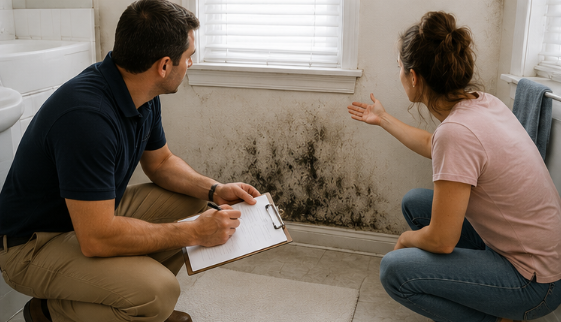
How to Handle a Tenant Mold Complaint: A Step-by-Step Guide for Texas Landlords
When a tenant contacts you about mold in their unit, how you respond in the next 24 to 48 hours matters enormously — both for their health and safety and for your legal protection. Texas landlords who follow a clear, documented process are far better positioned than those who react informally or delay action.
Here is a practical, step-by-step framework for handling a mold complaint correctly under Texas law.
Step 1: Acknowledge and Document the Complaint
The moment you receive a mold complaint — whether by text, email, phone, or in-person — treat it as a formal notice. Log the date, time, method of contact, and the tenant's specific description of what they observed or smelled. Respond in writing, even if the original complaint was verbal, to create a documented record.
Texas law measures your response timeline from the date you received notice. A written acknowledgment starts a clear clock and demonstrates good faith.
Step 2: Visually Assess the Reported Area Within 24 to 48 Hours
Do not wait. Arrange access and conduct a visual inspection of the area described as quickly as possible. Look for visible mold growth, moisture staining, water intrusion evidence (stains, warping, bubbling paint), and any active leaks.
Document what you find with photographs dated and timestamped at the time of the inspection. If you don't find visible mold but the tenant reports a persistent smell, that warrants further investigation — not a dismissal of the complaint.
Step 3: Identify and Fix the Moisture Source First
This step is critical and frequently skipped. Mold cannot be successfully remediated without eliminating the moisture source that is feeding it. A plumbing leak, roof penetration, HVAC condensate overflow, or exterior water intrusion must be repaired before or in parallel with any mold cleanup.
Cleaning mold off a surface while the underlying moisture problem persists is temporary at best. Within weeks, the mold will return. Courts and TDLR standards both hold that adequate remediation requires addressing the source.
Step 4: Determine Whether Licensed Professionals Are Required
Under Texas Occupations Code Chapter 1958, mold remediation affecting 25 or more contiguous square feet must be performed by a TDLR-licensed Mold Remediation Contractor. Before a remediation contractor begins work, a licensed Mold Assessment Consultant must separately inspect and write a remediation protocol — the plan the remediator follows.
For smaller areas (under 25 contiguous square feet), the licensed contractor requirement does not apply, but proper documentation and careful cleanup are still advisable. When in doubt, engage licensed professionals. The documentation they produce protects you legally.
Step 5: Commission an Independent Mold Assessment
Rather than relying solely on the remediator's own evaluation of scope and severity, consider engaging an independent Mold Assessment Consultant (MAC) first. An independent MAC provides an unbiased determination of the extent of contamination and a remediation protocol that is not influenced by what the remediator would profit from cleaning.
This is especially important for significant problems where the scope — and the cost — are in question. An independent protocol also provides clear documentation that the work was specified correctly, which matters if a dispute arises later.
Step 6: Ensure a Certificate of Mold Remediation Is Issued
Once licensed remediation is complete, the remediator is required by Texas law to provide a Certificate of Mold Remediation (CMR) to the property owner within ten days of completing work. The CMR must include a statement from a mold assessor confirming that remediation was completed per protocol. Retain this certificate in your permanent property records.
If you ever sell the property, Texas law requires you to disclose CMRs issued within the five preceding years. Keep them organized and accessible.
Step 7: Obtain Post-Remediation Clearance Testing
Before releasing the unit back to the tenant, commission post-remediation clearance testing from an independent assessor — not the same company that performed the remediation. Clearance testing involves air sampling and surface sampling to confirm that mold levels have returned to acceptable, normal ranges and that cross-contamination to other areas did not occur.
Providing clearance test results to your tenant is both a best practice and a powerful liability protection. It documents that you took the complaint seriously, engaged professionals, and verified that the work was done correctly.
Step 8: Communicate With Your Tenant Throughout
Keep the tenant informed at each stage. Let them know when the inspection will occur, what was found, what steps will be taken, and when work is expected to be completed. Documented communication demonstrates good faith and reduces the likelihood of escalation to a legal or regulatory complaint.
If the mold is serious enough that the unit is temporarily uninhabitable, work with the tenant on temporary housing arrangements and consult your attorney about your obligations. Texas law allows tenants to terminate leases and seek damages when landlords fail to address habitability conditions — proactive communication and action are your best protection against that outcome.
How Mold Consultant Group Can Help