TDLR Licensed MAC #1963 · Independent · No Remediation Conflict
Schedule a Free Consultation - Call 832-280-4747
<span>Licensed Mold Testing & Inspection in The Woodlands, TX</span>
Call to Schedule 832-280-4747<a href="tel:8322804747">📞<span>Licensed Mold Testing & Inspection in The Woodlands, TX</span>
<a href="tel:8322804747">📞 832-280-4747 — Free
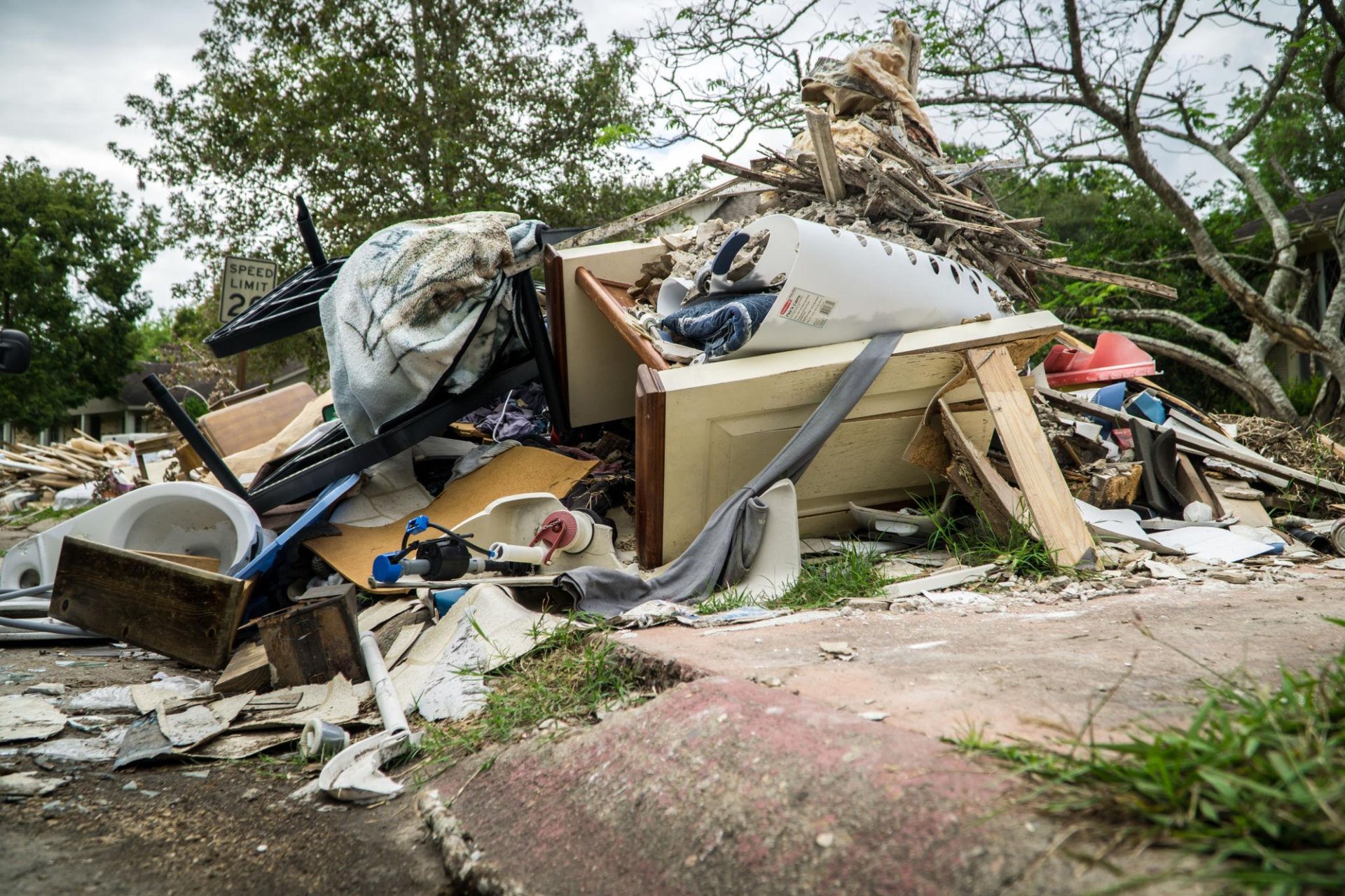
Hurricane Season Prep - Tips for Southeast Texas Homeowners
Discover essential hurricane season prep tips for Southeast Texas homeowners. Learn how to prep for the season, respond quickly after flooding, and prevent mold from spreading.
FLOOD AND WATER DAMAGE
Brian Boone
5/7/20266 min read
Hurricane Season Mold Prep: A Houston-Area Homeowner's Guide
By Mold Consultant Group | TDLR Licensed MAC #1963 | Serving The Woodlands, Spring, Conroe & Montgomery County, TX
Hurricane season in the Houston area runs from June 1 through November 30 — six months during which Montgomery County and surrounding communities face elevated risk from tropical storms, heavy rainfall, flooding, and the mold that follows almost every significant water event. For homeowners in The Woodlands, Spring, Conroe, Magnolia, and throughout the region, the question isn't whether a major storm will produce mold conditions. The question is whether you're prepared to respond quickly enough to prevent a manageable situation from becoming a serious one.
This guide covers what to do before a storm, what to do in the critical 72-hour window after water intrusion, and how to document everything in a way that protects your insurance claim and your family's health.
Why the Houston Area Is Uniquely Mold-Vulnerable After Storms
Most regions that experience flooding deal with mold as an aftermath concern. In the Houston area, several factors amplify that risk significantly:
Pre-existing humidity. Our baseline outdoor humidity averages 75% or higher for much of the year. When a storm adds flooding or water intrusion to that already-humid environment, the conditions for rapid mold growth — moisture plus an organic food source plus temperature — are met almost immediately.
Slab foundations trap water. The majority of Houston-area homes are built on slab foundations. When water enters a slab-on-grade home, it has nowhere to drain. It saturates drywall at the base, wicks upward into wall framing, and is absorbed by carpet padding and subfloor materials. Even after visible water is removed, the materials remain elevated in moisture content — often for weeks.
Our storms are severe. Hurricane Harvey (2017) deposited more than 60 inches of rain over parts of the Houston metro — the most rainfall ever recorded from a single storm in United States history. Tropical Storm Imelda (2019) produced 40+ inches in some areas. These aren't once-in-a-century events anymore. Our infrastructure and our homes are routinely tested by extreme rainfall.
The 24–48 hour rule. Mold can begin colonizing a wet surface within 24 to 48 hours under warm, humid conditions. In a Houston-area home after a flooding event — where temperatures are high and humidity is at its peak — that window is often shorter. Acting quickly after water intrusion is not optional.
Before Hurricane Season: What to Do Now
The best mold prevention after a storm starts before the storm arrives. A few hours of preparation significantly reduces both the risk of water intrusion and the severity of mold development if intrusion occurs.
Pre-Season Preparation Checklist
Inspect and clean gutters and downspouts — clogged gutters direct water against fascia and into the attic
Check weatherstripping on all exterior doors — gaps allow water entry during wind-driven rain
Inspect roof flashing around chimneys, vents, and skylights — these are primary water entry points
Test your HVAC condensate drain line — flush with diluted bleach to prevent algae blockage
Photograph the interior of each room at floor level — this documents pre-storm condition for insurance
Locate your main water shutoff — if pipes are damaged in a storm, fast shutoff limits water spread
Check your flood insurance policy — confirm coverage limits and what documentation is required for a claim
Stock waterproofing materials — hydraulic cement, sandbags, plastic sheeting for rapid response
During a Storm Event: Minimize Water Entry
If a significant storm is approaching:
• Move valuables, important documents, and irreplaceable items to upper floors or off-site
• Place sandbags at door thresholds if flooding is forecast for your area
• Turn off the HVAC system if flooding is likely — a flooded air handler distributes contaminated water throughout your duct system
• Document any water entry as it happens — video is especially useful for insurance claims
• Do not enter flooded areas if water could be in contact with electrical systems
The Critical 72-Hour Window After Water Intrusion
This is the most important section of this guide. What you do in the 72 hours after water enters your home determines whether you're dealing with a controlled remediation or a whole-house mold event.
1. Remove standing water immediately. Every hour of standing water is an hour of additional moisture absorption into building materials. Wet/dry vacuums, submersible pumps, and professional water extraction services are all appropriate depending on the volume of water involved.
2. Open windows and run fans — but only if outdoor humidity is lower than indoor humidity. In Houston after a storm, outdoor humidity is often extreme. Running fans when outdoor humidity is 90% pulls more moisture in. Check conditions before ventilating.
3. Run dehumidifiers continuously. Industrial-grade dehumidifiers (available from rental centers) are significantly more effective than residential units. Empty the reservoir frequently or set up continuous drainage.
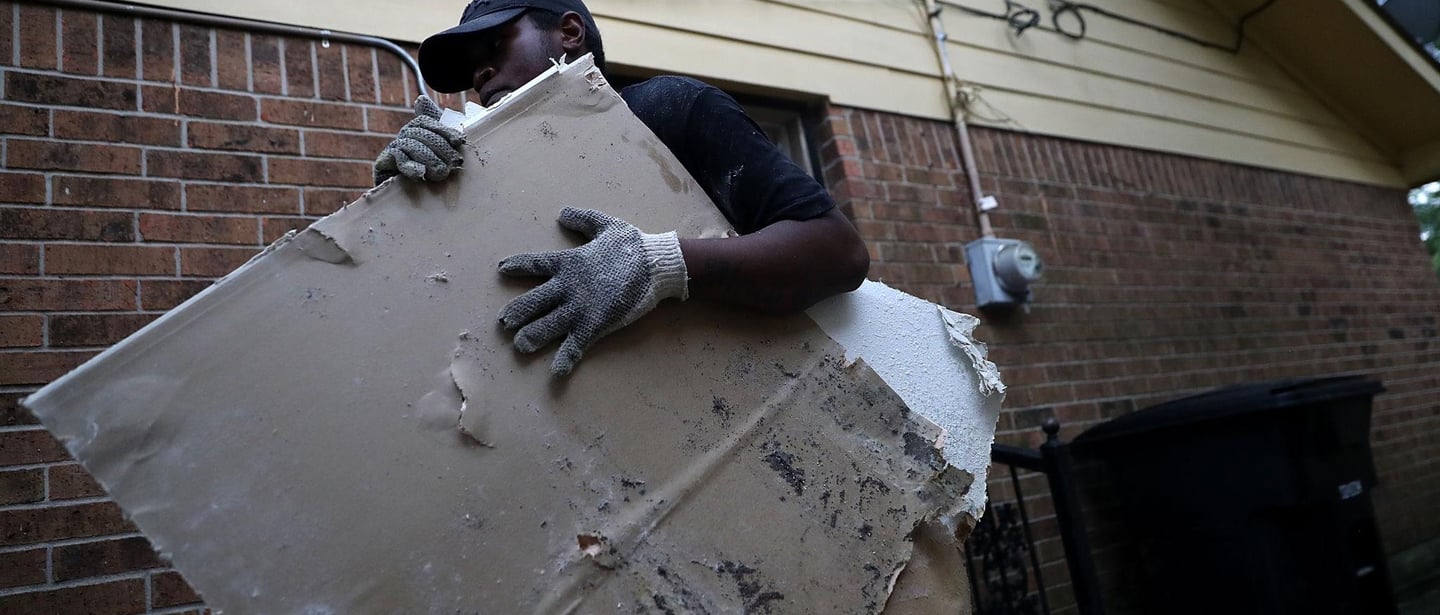
4. Remove wet materials within 24–48 hours. Carpet and carpet padding that has been saturated almost never dry adequately and should be removed promptly. Wet drywall that remains in contact with framing will wick moisture upward and support mold growth behind intact surfaces.
5. Document everything before removing materials. Photograph every affected area, every saturated material, every water line. This documentation is critical for insurance claims and for establishing the scope of damage before any remediation.
6. Call a licensed mold assessor before remediation begins. Under Texas law, a licensed MAC must assess and write a protocol before a licensed MRC performs remediation. An independent assessment also establishes the pre-remediation condition — essential for clearance testing later and for insurance documentation.
What NOT to do after flooding:
Do not use bleach on flooded areas as a mold prevention measure — it is not effective on porous materials
Do not turn your HVAC back on until a professional has confirmed the air handler and ducts were not affected
Do not paint over water-stained or discolored drywall — this hides damage and traps moisture
Do not sign a remediation contract before getting an independent assessment — you have no way to evaluate the scope without it
Do not assume 'dried out' means mold-free — mold can develop and spread in wall cavities long after surfaces appear dry
Insurance Documentation: What You Need for a Successful Claim
Mold-related insurance claims in Texas are frequently denied or reduced — not because coverage doesn't exist, but because documentation is inadequate. A storm event that produces water intrusion and subsequent mold is potentially covered under your homeowners policy (if the cause was a covered peril like wind-driven rain) or your flood policy (if the cause was rising water). The key requirements:
• Prompt reporting — contact your insurer within 24–48 hours of discovering damage, not after remediation is complete
• Photographic documentation of all damage before any cleanup or repairs
• A professional mold assessment report from a licensed MAC — this establishes what was present and when
• Records of all mitigation efforts — dehumidifier rental receipts, water extraction invoices, dates of actions taken
• A written remediation protocol from a licensed MAC before remediation begins
• A Certificate of Mold Damage Remediation (CMDR) after remediation is complete — required under Texas law
An independent mold assessment report from Mold Consultant Group provides the professional documentation that insurance adjusters need to process claims. We have worked with homeowners throughout The Woodlands, Spring, Conroe, and Montgomery County on post-storm assessments and the reports are specifically structured to support insurance documentation requirements.
After the Storm: Getting Back to Normal
Once your home has been professionally assessed, remediated by a licensed MRC, and cleared with a post-remediation verification test, you can return to normal occupancy with confidence. The CMDR (Certificate of Mold Damage Remediation) that accompanies a successful clearance test is a permanent record of the remediation — valuable for your own files, for insurance, and for future real estate transactions.
If your home experienced a past storm event — including Harvey or any subsequent flooding — and was 'dried out' but never professionally assessed and cleared, that history is worth investigating. We continue to find unaddressed mold in homes throughout this region that trace back to water events from years ago.
We're Here When You Need Us
Mold Consultant Group serves The Woodlands, Spring, Conroe, Magnolia, Montgomery, Willis, Tomball, Cypress, and Northwest Houston. We understand the specific flooding history, housing stock, and climate conditions of this region — and we prioritize assessments following significant storm events.
Preparing for hurricane season or dealing with post-storm water damage? Call 832-280-4747. We move quickly after storm events to help you act within the critical 72-hour window.
Mold Consultant Group, LLC | PO Box 206, Montgomery, TX 77356 | TDLR Licensed MAC #1963 | IICRC Master Cleaner #266 | Independent — No Remediation Conflict
We serve The Woodlands, Spring, Conroe, and the surrounding areas of Montgomery County. Call us at 832-280-4747 or visit moldconsultantgrp.com.
Hurricane Season Prep: How to Protect Your Home from Post-Storm Mold in Southeast Texas
This information is provided for educational purposes only. For property-specific recommendations, professional mold testing is recommended.
You Might Also Find Helpful:
→ Flood Policies & Homeowners Insurance in Texas
https://moldconsultantgrp.com/expectations-for-flood-policies-and-homeowners-insurance-in-texas
→ The Hidden Costs of Ignoring Mold
https://moldconsultantgrp.com/the-hidden-costs-of-ignoring-mold
→ Mold Prevention in High-Humidity Areas
Mold Consultant Group
Independent Mold Testing & Iinspection in The Woodlands, TX.
TDLR Licensed MAC #1963.
PO Box 206, Montgomery TX 77356
Company
Hours
Mon–Thu: 9AM–5PM
Friday: 9AM–4PM
Saturday: By Appt
© 2026 Mold Consultant Group, LLC. All rights reserved.
Privacy Policy · Terms of Service · Disclaimer
TDLR MAC #1963 · MRC #0223 · IICRC Master Cleaner #266