TDLR Licensed MAC #1963 · Independent · No Remediation Conflict
Schedule a Free Consultation - Call 832-280-4747
<span>Licensed Mold Testing & Inspection in The Woodlands, TX</span>
Call to Schedule 832-280-4747<a href="tel:8322804747">📞<span>Licensed Mold Testing & Inspection in The Woodlands, TX</span>
<a href="tel:8322804747">📞 832-280-4747 — Free
Learn why mold alive or dead can harm your health.
Learn why mold alive or dead can harm your health. Discover the risks and toxicity of mold exposure to protect your home and well-being. Mold health risks
INDOOR AIR QUALITY
Brian Boone
3/28/20264 min read
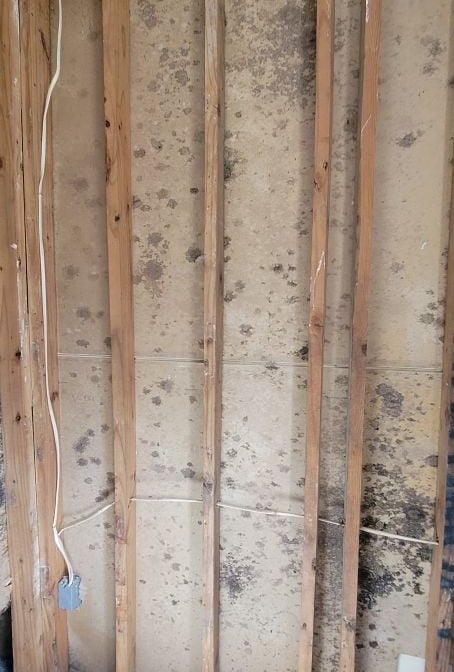
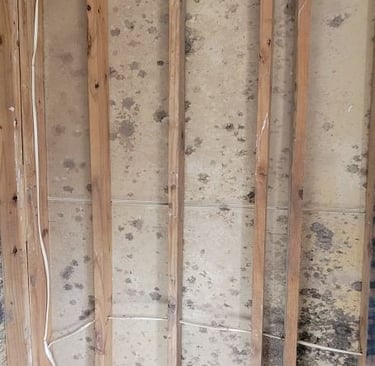
Live and Dead Mold: Understanding the Hazards
Learn Why Mold — Alive or Dead — Can Harm Your Health
By Mold Consultant Group | TDLR Licensed MAC #1963 | Serving The Woodlands, Spring, Conroe & Montgomery County, TX
One of the most common misconceptions we encounter when working with homeowners throughout The Woodlands, Spring, Conroe, and Montgomery County is the assumption that once mold is killed — whether by bleach, antimicrobial spray, or professional biocide application — the health risk is gone. It is a logical assumption. It is also incorrect.
Dead mold can harm your health just as living mold can. Understanding why this is true changes how you think about mold remediation, clearance testing, and what it actually means for a mold problem to be resolved.
What Makes Living Mold Harmful
Living mold produces harm through two primary mechanisms:
Spore production: Living mold colonies continuously release microscopic spores into the air. These spores are inhaled, trigger allergic responses in sensitized individuals, and in the case of certain species, carry mycotoxins on their surface. Elevated airborne spore concentrations from living mold are what air sampling measures and what triggers health symptoms in occupants.
Mycotoxin production: Certain mold species — including Stachybotrys chartarum, Aspergillus, and Penicillium — produce mycotoxins as metabolic byproducts while actively growing. These chemical compounds are associated with more serious health effects including neurological symptoms, immunosuppression, and in cases of heavy exposure, bleeding disorders.
What Makes Dead Mold Harmful
When mold is killed — by drying, by chemical treatment, or by the end of its moisture source — the biological organism is no longer alive. But the physical remains of the mold colony and its chemical byproducts persist:
Dead spores remain airborne and allergenic: Mold spores don't become harmless when the organism dies. The proteins on the spore surface that trigger allergic immune responses are still present and still active. Dead spores inhaled by a mold-allergic individual produce the same allergic response as live spores. A home where mold has been killed with bleach but the physical remains have not been removed still has an elevated dead-spore load in the air.
Mycotoxins persist independently of the mold: This is the most important and most misunderstood aspect of mold remediation. Mycotoxins are chemical compounds — they are not living organisms and they are not destroyed when the mold that produced them is killed. They remain on surfaces, in building materials, and in settled dust. A wall where Stachybotrys has been killed with bleach still contains trichothecene mycotoxins in the drywall paper and adjacent materials. Physical removal of the contaminated material is the only way to remove the mycotoxins.
Fragmented dead mold releases smaller particles: Dead mold colonies that dry out and become brittle can fragment into particles smaller than intact spores — particles small enough to penetrate deeper into the respiratory tract than larger spores. Some research suggests that the inflammatory potential of these ultrafine mold fragments may be significant even at low concentrations.
Why 'Kill the Mold' Is Not the Same as 'Remove the Mold'
This distinction is the reason Texas law requires physical removal of mold-contaminated materials by a licensed MRC, and why biocide application alone — spraying antimicrobials on mold — does not satisfy the remediation standard under TDLR regulations.
A remediation contractor who sprays biocide on mold-affected drywall and leaves the material in place has killed the living mold. They have not removed the dead spores, the mycotoxins, or the contaminated material. The wall looks cleaner. It may be painted over. But the health hazard from the residual mold material and its chemical byproducts remains.
Proper remediation requires:
• Containment of the affected area to prevent spore distribution during work
• Physical removal of mold-contaminated materials — drywall, insulation, flooring
• HEPA vacuuming of all affected surfaces
• Cleaning of adjacent areas to remove settled spores and fragments
• Verification by an independent MAC that airborne spore counts have returned to normal
What This Means for DIY Mold Treatment
The practice of spraying bleach on visible mold growth — one of the most common DIY mold responses — kills the surface mold but leaves the dead mold material in place on porous surfaces. On drywall, grout, wood, and other porous materials, the bleach does not penetrate to the full depth of colonization, and even the material it does reach is left in place after treatment.
For small, isolated mold growth on non-porous surfaces — tile, glass, sealed metal — cleaning and disinfection is appropriate. For mold on porous materials, or for any mold condition involving potentially mycotoxin-producing species, physical removal by a licensed professional is the correct approach.
What This Means for Clearance Testing
Post-remediation clearance testing by an independent MAC confirms that physical removal was thorough enough to return airborne spore counts to acceptable levels. The clearance standard is not 'all mold is gone' — that is not achievable or necessary. The standard is that indoor spore counts are comparable to outdoor baseline levels, indicating that no indoor amplification source remains.
This standard protects homeowners from incomplete remediation regardless of whether the mold was killed but not removed, or removed but not thoroughly enough. The air sampling result is the objective measure — not the contractor's assurance that the job is done.
Had mold treated but not sure it was properly removed? Call 832-280-4747. We perform clearance testing and can assess whether a previous treatment was adequate.
Mold Consultant Group, LLC | PO Box 206, Montgomery, TX 77356 | TDLR Licensed MAC #1963 | IICRC Master Cleaner #266 | Independent — No Remediation Conflict
At Mold Consultant Group, we follow IICRC S520 standards and Texas state regulations for proper mold documentation and verification.
Serving: Montgomery | The Woodlands | Spring | Conroe | Willis | Tomball | Magnolia | Cypress
📞 Concerned About Mold — Dead or Alive?
Call 832-280-4747 or schedule a professional mold inspection at www.moldconsultantgrp.com
If it’s in your air, it’s in your lungs — even if it’s not growing. Let’s get it out the right way.
This information is provided for educational purposes only. For property-specific recommendations, professional mold testing is recommended.
You Might Also Find Helpful:
→ Mycotoxins: What They Are and How They Affect Your Health
https://moldconsultantgrp.com/mycotoxins-what-they-are-and-how-they-affect-your-health
→ Mold Sensitivities in Humans and Pets
https://moldconsultantgrp.com/mold-sensitivities-in-humans-and-pets
→ The Mold Removal & Remediation Process
https://moldconsultantgrp.com/the-mold-removal-and-remediation-process-what-to-expect
Mold Consultant Group
Independent Mold Testing & Iinspection in The Woodlands, TX.
TDLR Licensed MAC #1963.
PO Box 206, Montgomery TX 77356
Company
Hours
Mon–Thu: 9AM–5PM
Friday: 9AM–4PM
Saturday: By Appt
© 2026 Mold Consultant Group, LLC. All rights reserved.
Privacy Policy · Terms of Service · Disclaimer
TDLR MAC #1963 · MRC #0223 · IICRC Master Cleaner #266