TDLR Licensed MAC #1963 · Independent · No Remediation Conflict
Schedule a Free Consultation - Call 832-280-4747
<span>Licensed Mold Testing & Inspection in The Woodlands, TX</span>
Call to Schedule 832-280-4747<a href="tel:8322804747">📞<span>Licensed Mold Testing & Inspection in The Woodlands, TX</span>
<a href="tel:8322804747">📞 832-280-4747 — Free
Why You Should Not Use Bleach for Mold Removal
Discover the reasons why you shouldn't use bleach for mold cleaning, as it is not effective. Learn safer and more effective mold cleaning tips to protect your health and home.
INDOOR AIR QUALITY
Brian Boone
3/31/20265 min read
Why You Should Not Use Bleach for Mold Removal
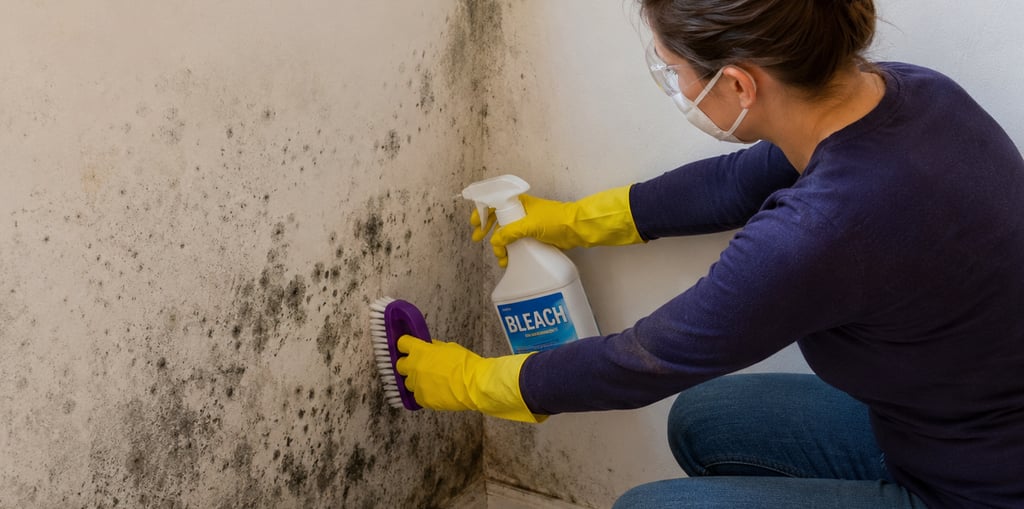
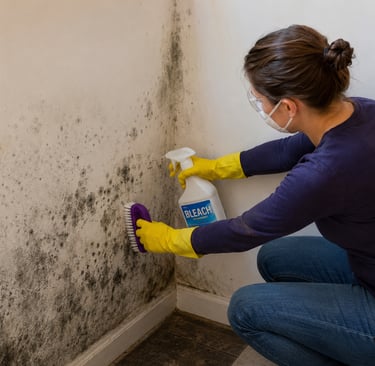
If you've spotted mold in your home, your first instinct might be to grab a bottle of bleach. It's cheap, it's familiar, and it seems to make the mold disappear. But here's the truth: bleach doesn't actually remove mold — it just hides it.
Understanding why bleach falls short is the first step toward protecting your home and your family for good.
The Bleach Myth: Where It Came From
For years, bleach was considered the go-to solution for mold cleanup. Early guidance from government agencies even suggested diluted bleach solutions for surface mold. That advice has since changed dramatically.
Today, both the EPA (Environmental Protection Agency) and OSHA (Occupational Safety and Health Administration) advise against using bleach as a standard practice for mold remediation. The professional standard — the ANSI/IICRC S520 for mold remediation — also excludes bleach from recommended cleanup methods.
So what changed? A better understanding of how mold actually grows.
Why Bleach Doesn't Work on Mold
1. Bleach Can't Penetrate Porous Surfaces
Mold doesn't just sit on top of a surface — it grows into it. On porous materials like drywall, wood, insulation, and grout, mold sends root-like structures called hyphae deep below the surface.
Bleach is mostly water, and its active ingredient (chlorine) evaporates quickly. The chlorine stays on the surface while the water soaks in — meaning bleach barely scratches the problem. The mold on top may look gone, but the colony underneath remains intact and continues to grow.
On non-porous surfaces like tile or glass, bleach can kill surface mold effectively. But in a typical home, most mold problems involve porous building materials — exactly where bleach fails.
2. Bleach Actually Feeds the Mold
Here's the counterintuitive part: using bleach on drywall or wood can make your mold problem worse.
When bleach is applied, the chlorine evaporates rapidly, leaving behind a large amount of water. That moisture soaks into the porous material, creating an even more favorable environment for mold to grow. The surviving mold spores — still rooted beneath the surface — use that added moisture to regrow, often stronger than before.
3. It Gives a False Sense of Safety
Bleach removes the color from mold, not the mold itself. A surface that looked dark and visibly contaminated will appear white and clean after bleach treatment — even if the mold colony is still very much alive underneath.
This false appearance of cleanliness can lead homeowners to believe the problem is solved, delaying proper remediation and allowing the mold to spread further into walls, floors, and structural materials.
4. Dead Mold Is Still a Health Hazard
Even when bleach does manage to kill surface mold, the dead spores remain on the surface. Dead mold fragments can still trigger allergic reactions, respiratory issues, and other health symptoms — particularly in people with asthma, compromised immune systems, or mold sensitivities.
Effective mold remediation means removing the mold, not just killing it in place.
5. Bleach Spreads Spores
Scrubbing mold with bleach disturbs the colony and releases spores into the air. Those airborne spores can settle in other areas of your home, potentially starting new growth in places that weren't previously affected. If your HVAC system is running, those spores can travel throughout the entire house.
6. Bleach Poses Its Own Health Risks
Beyond its ineffectiveness, bleach is a hazardous chemical. OSHA classifies sodium hypochlorite — the active ingredient in household bleach — as a serious health hazard. Exposure in enclosed spaces can cause:
Respiratory irritation and lung damage
Eye and skin burns
Dizziness and nausea from chlorine fumes
Mixing bleach with other common cleaning products (especially ammonia or vinegar) can produce toxic gases. For homeowners attempting DIY cleanup, this is a real and serious risk.
What You Can Use Instead (For Small, Non-Porous Areas)
For very small areas of surface mold on non-porous materials — think bathroom tile grout, glass, or porcelain — these alternatives are safer and more effective:
Undiluted white vinegar — kills over 80% of mold species and penetrates surfaces better than bleach
Hydrogen peroxide (3%) — effective on non-porous surfaces without the toxic fumes
Dish soap and water — the EPA actually recommends scrubbing hard surfaces with detergent and water, then drying completely
That said, these solutions are only appropriate for very small, isolated patches of surface mold (generally less than 10 square feet) on hard surfaces. If you're dealing with mold on drywall, wood framing, insulation, or any area larger than about one square foot, professional assessment is the right call.
When to Call a Professional
Most household mold problems go deeper than what you can see. If you notice:
Mold spreading across walls, ceilings, or floors
A persistent musty odor even after cleaning
Mold returning shortly after treatment
Any visible growth on drywall, wood, or fabric
Water damage or recent flooding
…it's time to stop the DIY approach and contact a licensed mold professional.
In Texas, mold assessors and mold remediators are licensed and regulated by the Texas Department of Licensing and Regulation (TDLR). A licensed mold assessor can identify the full extent of the problem, locate hidden moisture sources, and provide a written remediation protocol — the foundation of any proper cleanup.
What Professional Mold Assessment Covers
A professional assessment isn't just a visual check. At Mold Consultant Group, our licensed inspections include:
Air and surface sampling — identifies mold species and spore concentration levels
Moisture mapping — locates hidden moisture behind walls and under flooring
Infrared thermal imaging — reveals water intrusion not visible to the naked eye
Detailed written report — documents findings, species present, health risks, and recommended next steps
This gives you a complete picture of what you're dealing with — not just what's visible on the surface.
The Bottom Line
Bleach is a cleaning agent, not a mold remediation tool. It may make mold look gone, but on the porous materials found in most homes, it leaves the root of the problem untouched — and often makes things worse by adding moisture to the affected area.
If you're in The Woodlands, Conroe, Spring, Tomball, Magnolia, or the surrounding Houston metro area and you're dealing with mold, don't waste time on solutions that don't work. Contact Mold Consultant Group for a licensed mold assessment and get a clear, honest answer about what's in your home and what it takes to actually fix it.
📞 Call us at 832-280-4747 or visit moldconsultantgrp.com
Inspect · Test · Guide
Not sure whether your mold situation needs professional assessment? Call 832-280-4747 for a free phone consultation. We'll help you determine the right approach — no pressure.
Mold Consultant Group, LLC | PO Box 206, Montgomery, TX 77356 | TDLR Licensed MAC #1963 | IICRC Master Cleaner #266 | Independent — No Remediation Conflict
Serving Your Area with Integrity & Expertise
Mold Consultant Group proudly serves The Woodlands, Spring, Conroe, Magnolia, Tomball, Cypress, Willis, Montgomery, and North Harris County. Whether you’re a homeowner, property manager, landlord, or tenant, we’re here to help you make informed, safe decisions about mold in your environment.
🛑 Don’t Bleach It — Test It.
Your health and your home deserve better than a temporary fix.
Call us today at (832) 280-4747
Request an inspection at www.moldconsultantgrp.com
Let us help you get to the source of the mold, so it can be safely and permanently removed.
Not sure whether your mold situation needs professional assessment? Call 832-280-4747 for a free phone consultation. We'll help you determine the right approach — no pressure.
Mold Consultant Group, LLC | PO Box 206, Montgomery, TX 77356 | TDLR Licensed MAC #1963 | IICRC Master Cleaner #266 | Independent — No Remediation Conflict
This information is provided for educational purposes only. For property-specific recommendations, professional mold testing is recommended.
You Might Also Find Helpful:
→ Mold Myths vs. Facts
https://moldconsultantgrp.com/mold-myths-vs-facts
→ Why DIY Mold Testing Kits Fall Short
https://moldconsultantgrp.com/why-diy-mold-home-testing-kits-fall-short
→ The Mold Removal & Remediation Process
https://moldconsultantgrp.com/the-mold-removal-and-remediation-process-what-to-expect
Mold Consultant Group
Independent Mold Testing & Iinspection in The Woodlands, TX.
TDLR Licensed MAC #1963.
PO Box 206, Montgomery TX 77356
Company
Hours
Mon–Thu: 9AM–5PM
Friday: 9AM–4PM
Saturday: By Appt
© 2026 Mold Consultant Group, LLC. All rights reserved.
Privacy Policy · Terms of Service · Disclaimer
TDLR MAC #1963 · MRC #0223 · IICRC Master Cleaner #266